


Some children and teenagers need palatal expansion as part of orthodontic treatment, while others do not. Invisalign is not a reason, by itself, to use or avoid an expander. The decision depends on jaw width, the bite, dental development and the type of movement needed.
The key distinction is between moving teeth and addressing a narrow upper jaw. A child can have crowded teeth without needing the same treatment as another child whose upper jaw is too narrow. An examination is needed to tell those situations apart.
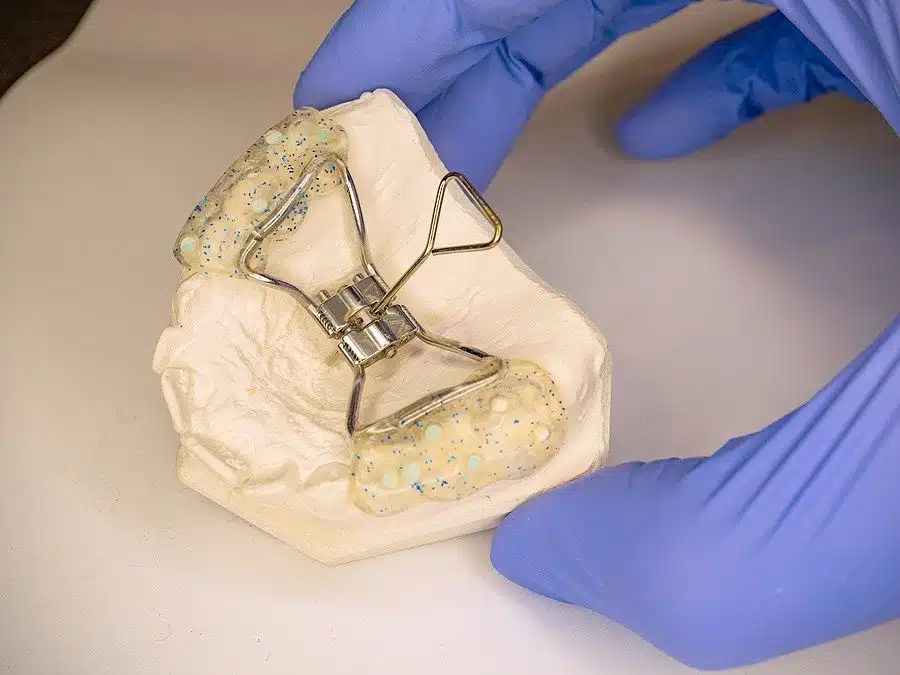
What does a palatal expander do?
A palatal expander is an appliance used to widen the upper arch or jaw in an appropriately selected patient. Some designs are fixed, while others are removable. Their mechanisms and instructions differ.
The American Association of Orthodontists explains that expanders may be considered for problems such as a narrow upper jaw, certain crossbites or space concerns. Not every crowded smile requires one, and not every crossbite has the same cause.
This is why photographs of straight-looking front teeth do not settle the question. The orthodontist needs to assess how the back teeth meet, the relationship between the arches and the child’s development.
Aligners and expanders have different jobs
Invisalign for kids and teens at Halabi Orthodontics uses a series of removable aligners. The practice describes treatment for children with a mixture of baby and permanent teeth as well as for teens.
An aligner plan may include movements that increase room within the dental arch. That should not be assumed to be interchangeable with every type of expansion aimed at a narrow upper jaw. Ask the orthodontist to show you what is being changed: tooth position, arch form, the underlying jaw relationship or a combination.
You may also hear the name of a branded expander. A similarly branded aligner and expander are separate appliances, and the name alone does not establish that your child needs both. Ask which device is proposed and what finding supports its use.
Why age and development matter
Children do not all reach the same growth stage at the same age. The orthodontist considers development rather than selecting treatment solely from a birthday or school grade.
Growth can affect the options available for expansion and when an appliance may be useful. An older teenager may require a different discussion from a younger child, even if their smiles look similar. The examination and any clinically appropriate records help establish the plan.
The AAO recommends an initial orthodontic check by age seven. That is a time to assess development, not an instruction that all seven-year-olds need an appliance. Some children are monitored and reviewed later.
Questions that explain the recommendation
| What you want to understand | Question to ask |
|---|---|
| Diagnosis | Is the upper jaw narrow, or is the concern mainly tooth position? |
| Bite | Is there a crossbite, and what is causing it? |
| Appliance choice | What job would the expander do that aligners alone would not? |
| Timing | Why is this the right stage of development to treat? |
| Sequence | Would expansion happen before, during or separately from aligners? |
| Next stage | What treatment might still be needed afterward? |
A helpful explanation connects the finding to the proposed appliance. It should also describe reasonable alternatives and the implications of observation or waiting where those are options.
What would daily life involve?
Instructions depend on the expander’s design. Ask who is responsible for any home steps, how cleaning works and when the child should be reviewed. Do not copy an adjustment schedule from another family or an online video.
If aligners are also prescribed, ask for the wear and change instructions for each appliance separately. A calendar can help a parent and teen track appointments and responsibilities, but the clinician decides the treatment sequence.
Tell the team about music, sport, school meals and any difficulty following a daily routine. These details help the conversation about adapting to an appliance. They do not justify changing the instructions without checking first.
Common questions from parents
Does crowding always mean my child needs an expander? No. Crowding can have different causes and may be managed in different ways. The examination should explain why expansion is or is not appropriate.
Will Invisalign First replace an expander? Not automatically. Ask which movements the aligners are intended to achieve and whether the narrowness involves teeth, jaw structure or both.
Can a teenager still be assessed for expansion? Yes. The assessment considers growth, anatomy and the problem being treated. The available methods and limits may differ from those for a younger child.
Will expansion mean no braces or aligners later? Not necessarily. Expansion may address one part of a wider plan, and a later treatment stage may still be recommended.
Can we adjust the appliance ourselves if progress seems slow? Only follow the specific instructions you were given. More adjustments do not automatically mean better or faster treatment.
If you have been told your child may need expansion, bring the recommendation and your questions to a Halabi Orthodontics consultation. The team can explain how the finding relates to the broader Invisalign treatment plan rather than choosing an appliance from appearance alone.



 What patients are saying
 Your smile our passion
 News and Events
