


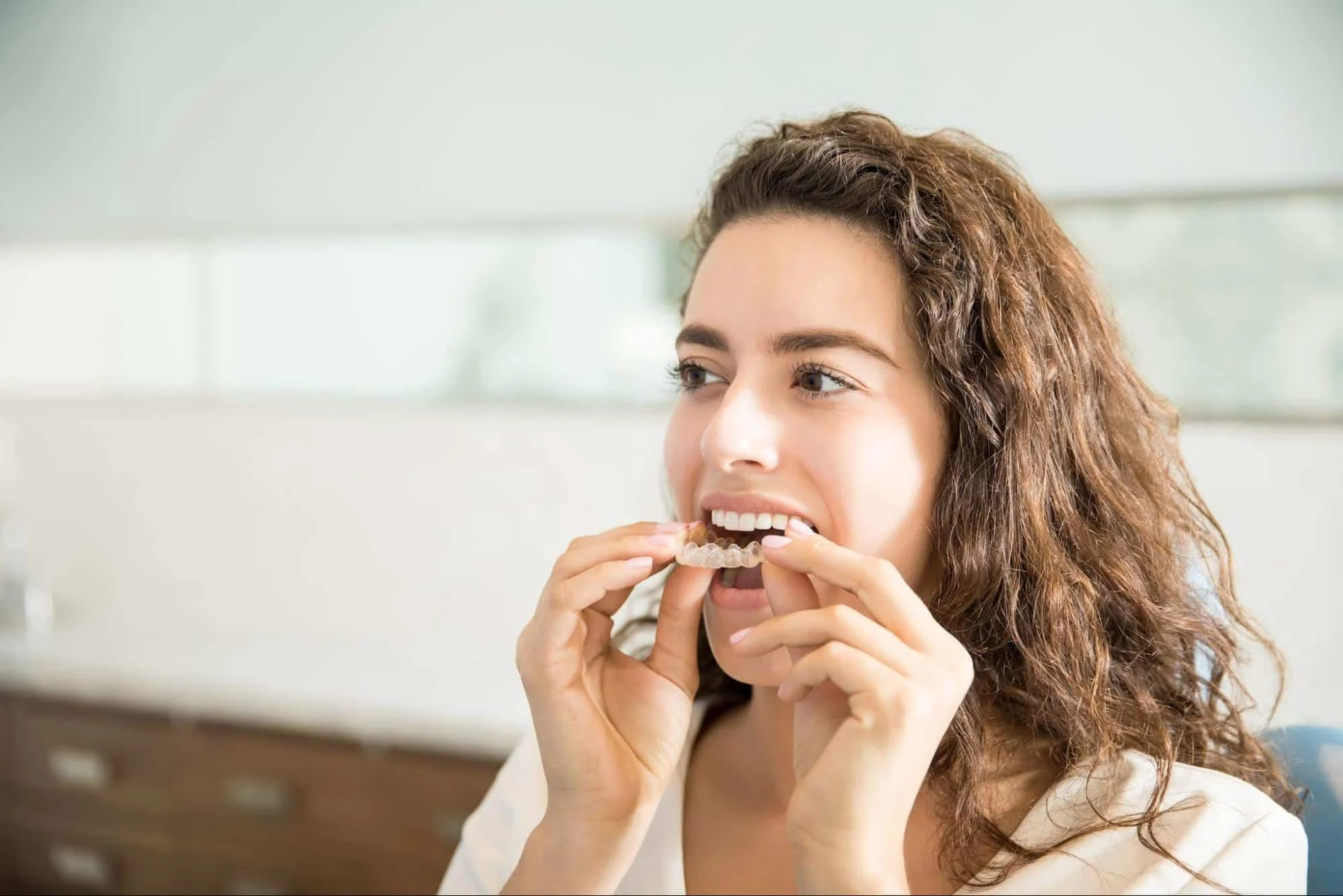
Does Invisalign change your face shape? People ask this question from two very different places. Some are hoping the answer is yes because they want their jawline to look better. Others are hoping the answer is no because they are worried treatment will alter how they look. The honest answer is that Invisalign in Brooklyn NY at Halabi Orthodontics can produce subtle but real changes to the face, particularly in the jaw and lip area, and whether that happens depends almost entirely on what your bite looks like before treatment starts. This guide walks through exactly what to expect.
The Short Answer: It Depends on Your Bite
Invisalign moves teeth. Teeth sit in bone. Bone is connected to your jaw. When you correct the way your teeth meet, particularly in cases involving significant overbite, underbite, or severe crowding, the position of your lips and jaw relative to your face can shift noticeably. For patients with primarily cosmetic crowding or minor spacing issues, the face looks essentially the same, just with a straighter smile.
The distinction matters because patients who expect dramatic facial transformation from a mild aligner case will be disappointed, and patients who are nervous about looking different after correcting a deep overbite deserve to know that change is actually part of the benefit.
What Bite Issues Cause the Most Visible Facial Change
| Bite Issue | Facial Impact After Invisalign | Noticeable Change? |
|---|---|---|
| Deep overbite | Chin appears less recessed, lips relax into more natural position | Yes, often significant |
| Underbite | Lower jaw moves back slightly, face becomes more balanced | Yes, visibly improved |
| Open bite | Lips close more naturally, less lip strain at rest | Moderate, soft tissue |
| Severe crowding | Teeth aligned, smile wider, minimal facial skeletal change | Mostly smile, not face |
| Mild spacing | Gaps closed, smile appearance improved | Minimal |
| Crossbite | Jaw asymmetry reduced, face appears more symmetrical | Moderate to significant |
The Overbite Effect: The Most Common Facial Change

A deep overbite, where the upper front teeth cover significantly more of the lower teeth than they should, has a characteristic effect on facial appearance. The lower jaw sits in a more retruded position than it would with a correct bite. The chin may appear weaker or more recessed in profile. The lips often cannot rest together naturally without muscle effort, which creates a subtle strain in the lower face.
When Invisalign corrects a deep overbite, the lower jaw settles into a more forward and balanced position. The chin projection improves in profile. The lips meet more naturally at rest without compensating. For many Invisalign in Brooklyn NY patients at Halabi Orthodontics, this is the change they notice first in photos. It is not dramatic, but it is real and almost universally seen as an improvement.
What Invisalign Does NOT Change
It is equally important to be honest about what Invisalign cannot do. Clear aligner therapy moves teeth. It does not remodel bone, reposition the jaw skeletically, or change the underlying skeletal structure of the face. Patients with significant jaw discrepancies that are primarily skeletal, meaning the bone itself is positioned incorrectly rather than the teeth, may need orthognathic surgery combined with orthodontics to achieve meaningful facial change.
Invisalign also does not affect the nose, cheekbones, forehead, or overall facial proportions. Any social media content claiming Invisalign dramatically reshapes the face is overstating what the treatment delivers for most patients.
The “Invisalign face” myth: Some online content claims long-term Invisalign use changes the face negatively by affecting muscle tone or bone density. This is not supported by clinical evidence. What people sometimes attribute to “Invisalign face” is simply the normal aging process of the face occurring during a multi-year treatment period.
Before and After: What Actually Changes
The profile view
The most noticeable changes happen in profile, particularly for overbite and underbite corrections. The relationship between the upper lip, lower lip, and chin shifts when the bite relationship changes. For many patients, the profile view after Invisalign looks more balanced and proportional than before, not because anything dramatic happened, but because the underlying bite was putting soft tissue out of its natural position.
The frontal view
From the front, the primary change is the smile itself. Aligned teeth, closed gaps, and a corrected midline produce a wider, more symmetric smile arc. The face itself changes very little from straight on unless a crossbite correction reduces visible jaw asymmetry.
The lip position
Lip posture at rest is one of the most common facial changes patients notice. When teeth are significantly crowded or protruded, the lips cannot fully relax together. After alignment, the lips settle into a more natural closed position without effort. This subtle change in resting lip posture is often what patients describe when they say their face looks different after treatment.
Does Invisalign Change Your Face Shape for Teens?
For teenagers, the answer is more significant than for adults because teens are still growing. Bite correction during the growth phase can guide jaw development in addition to moving teeth, producing more meaningful facial changes than the same correction performed in an adult with fully developed bone. This is one of the reasons Dr. Halabi recommends early evaluation and, where appropriate, treating teens during the optimal developmental window. The Invisalign for kids and teens guide covers what is different about aligner treatment for younger patients. For parents specifically, the guide to how Invisalign can boost a teen’s confidence addresses the social and emotional dimension of facial change during treatment.
What About Bite Issues After Invisalign?
One concern patients raise is whether Invisalign can create new bite problems while fixing existing ones. With properly planned treatment from an experienced provider, this should not happen. Dr. Halabi designs every treatment plan with the final bite relationship as the primary goal, not just tooth alignment. If you have experienced bite issues after Invisalign from a previous provider, that is something Dr. Halabi can assess and address at a consultation.
Invisalign in Brooklyn NY at Halabi Orthodontics

Dr. Eli Halabi has been providing Invisalign in Brooklyn NY for over 20 years from his Kings Highway practice. He graduated at the top of his class from the University of Pennsylvania, completed his orthodontic specialty training at George Washington University, and finished his residency at Children’s National Medical Center. He lectures and publishes in the orthodontic community and has earned over 200 five-star reviews from Brooklyn patients.
Whether you are asking does Invisalign change your face shape out of curiosity or out of genuine clinical concern, a free consultation with Dr. Halabi gives you an honest, personalized answer based on your actual bite and facial structure, not a generic reassurance.
Address: 575 Kings Highway, Brooklyn, NY 11223
New Patients: (718) 550-6832
Current Patients: (718) 676-5000
Book Your Free Invisalign Consultation at Halabi Orthodontics Brooklyn
Frequently Asked Questions
Does Invisalign change your face shape noticeably?
It depends on your bite. Patients with deep overbites, underbites, or crossbites often see visible changes in their profile, lip posture, and jaw balance after Invisalign. Patients with mild crowding or spacing see their smile improve but minimal change to their face shape. Dr. Halabi explains exactly what to expect for your specific case at the consultation.
Will Invisalign make my chin look different?
For overbite patients, yes. A deep overbite keeps the lower jaw in a retruded position that makes the chin appear less projected in profile. Correcting the overbite allows the jaw to settle into a more forward, balanced position, which improves chin projection in many patients. This is a positive change rather than something to be concerned about.
Can Invisalign fix a weak jawline?
Invisalign can improve the appearance of the jawline when the underlying cause is a bite issue, particularly an overbite or underbite. If the jaw itself is skeletically positioned incorrectly, orthodontic treatment alone, including Invisalign, has limits. Significant skeletal jaw discrepancies may require orthognathic surgery in combination with orthodontics for meaningful structural change.
Does Invisalign in Brooklyn NY cost the same as traditional braces?
At Halabi Orthodontics, Invisalign and braces are comparably priced, typically ranging from $2,000 to $6,000 depending on case complexity and treatment length. The practice accepts most insurance plans and offers flexible payment options including interest-free financing. A full cost breakdown is provided at the free consultation.
How long does Invisalign take to change the face?
Facial changes, where they occur, happen gradually as the bite corrects over the course of treatment. Most patients begin noticing lip posture and profile changes in the middle phase of treatment as the bite relationship improves. Most comprehensive Invisalign treatment at Halabi Orthodontics takes 12 to 24 months, with your specific timeline confirmed at the consultation.

 What patients are saying
 Your smile our passion
 News and Events