


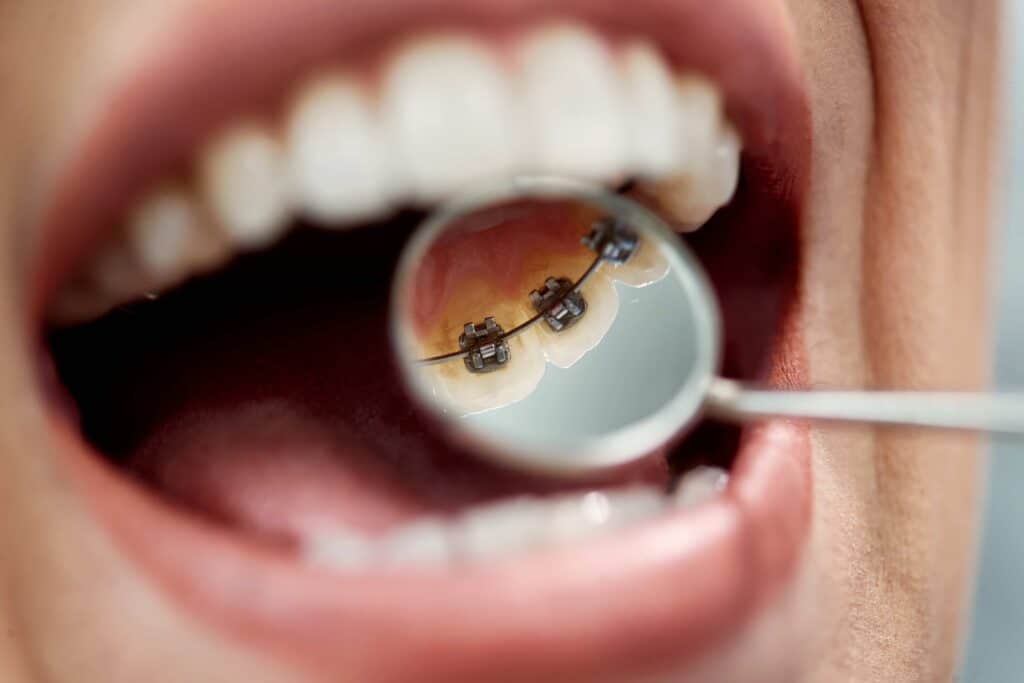
Knowing how to clean lingual braces is essential for anyone wearing them. Because the brackets and wires sit on the inside surface of your teeth, standard brushing does not reach where it needs to. The short answer: you need a soft-bristle toothbrush, an interdental proxabrush, a floss threader, and a water flosser, used in a deliberate sequence twice a day. If you are looking for lingual braces hygiene advice specific to your setup in Brooklyn, this step-by-step guide covers everything from tools to technique.
The whole appeal of lingual braces is that nobody knows you are wearing them. The catch is that the same hidden placement that makes them so discreet also makes cleaning behind teeth braces considerably harder than cleaning regular braces. The tongue is in the way. The angles are awkward.
Learning how to clean lingual braces properly is not optional: it is the difference between finishing treatment with healthy gums and finishing it with problems you did not start with. This guide covers everything lingual braces patients in Brooklyn and beyond need to know.
Why Cleaning Lingual Braces Is Harder Than Regular Braces
 With regular front-facing braces, you can see exactly what you are cleaning. You can watch in the mirror and adjust your angle in real time. With lingual braces, you are working blind, brushing an inner surface that is partially obstructed by your tongue, at an angle your toothbrush was not designed to reach. Research on oral hygiene in lingual braces patients shows that plaque accumulation is higher in the lingual region compared to labial braces, making a deliberate and structured cleaning routine essential from day one of treatment.
This is not a reason to avoid lingual braces. It is a reason to go into treatment with your eyes open and your tools ready.
The Tools You Actually Need
Standard brushing equipment is not enough for lingual braces. Before covering how to clean lingual braces step by step, here is what you need in your kit. Choosing the best toothpaste for braces is one piece of it, but the tools matter just as much.
| Tool | What It Does | Why It Matters for Lingual Braces |
|---|---|---|
| Soft-bristle toothbrush | Main surface cleaning | Flexible enough to angle toward inner surfaces |
| Orthodontic proxabrush / interdental brush | Cleans between brackets and wire | Essential for reaching lingual hardware |
| Water flosser / oral irrigator | Flushes debris from hard-to-reach areas | Gets behind brackets that floss thread cannot |
| Floss threader or super floss | Threads floss under the wire | Manual flossing still needed between teeth |
| Fluoride mouthwash | Strengthens enamel, reduces bacteria | Extra protection for enamel behind teeth |
| Small angled mirror | Visual access to lingual surface | Lets you see what you are cleaning |
How to Clean Lingual Braces: Step by Step
Run through this full routine twice daily, morning and night. A water flosser step can be added after every meal for extra protection.
- Rinse first. Before picking up your toothbrush, rinse with water or an antiseptic mouthwash to loosen any debris sitting against the brackets. This makes the brushing step more effective.
- Brush the outer surfaces first. Start with the front-facing surfaces of your teeth using a standard toothbrushing technique. Hold the brush at a 45-degree angle to the gum line, use small circular motions, and cover every tooth.
- Switch to the lingual surfaces. This is the critical part of how to clean lingual braces. Tilt the brush toward the inner surface and use small, circular strokes along the gum line. An angled handle or small-headed brush makes this significantly easier. Work slowly and systematically from one side to the other.
- Use an interdental brush around each bracket. Insert the small proxabrush above and below the archwire at each bracket. Move it gently back and forth to dislodge plaque from around the bracket base. Do this for every single bracket, not just the ones that feel like they need it.
- Floss with a threader or super floss. Thread the floss under the wire and between each pair of teeth. Curve it against each tooth surface and move gently up and down. Do not skip this step: the water flosser is a supplement, not a replacement.
- Use the water flosser. Direct the stream along the gum line and around each bracket on the lingual surface. Start at low pressure if you are new to it. A water flosser is particularly effective for flushing debris from the archwire area that interdental brushes cannot fully reach.
- Finish with fluoride mouthwash. Rinse for 30 to 60 seconds. Do not eat or drink for at least 30 minutes after. Fluoride mouthwash provides a protective layer that is especially valuable for the inner enamel surface, which has less natural saliva flow to protect it.
Time reality check: A proper lingual braces cleaning routine takes 8 to 12 minutes. That is longer than standard brushing. Patients who try to rush it to 2 minutes will see the consequences at their next appointment. Build the time into your schedule from day one and it becomes routine quickly.
Common Mistakes to Avoid
Even patients who understand how to clean lingual braces properly fall into these habits over time. Knowing them upfront helps you avoid the most common setbacks.
- Skipping the interdental brush. This is where most lingual braces patients fall short. The proxabrush does work that a toothbrush physically cannot do around the brackets.
- Relying on the water flosser alone. It is excellent at flushing, but it does not replace mechanical cleaning with floss and brush.
- Using too much pressure. Scrubbing hard does not clean better. It damages gum tissue and bends bristles, reducing effectiveness.
- Forgetting the tongue side of back teeth. The molars are hardest to reach and easiest to skip. Use the angled mirror to check your work.
- Eating without brushing afterward. Every meal leaves food debris trapped against lingual brackets. Rinsing immediately and brushing as soon as possible makes a significant difference over the course of treatment.
 For a More Complete Oral Hygiene Routine
The lingual cleaning steps above are the most specific part of life with hidden braces, but cleaning behind teeth braces sits within a broader oral hygiene commitment. The full oral hygiene with braces guide at Halabi Orthodontics covers everything from diet choices to professional cleaning frequency, and is worth reading alongside this post if you are early in your treatment.
Lingual Braces in Brooklyn at Halabi Orthodontics
Good lingual braces hygiene starts with the right practice guiding you from day one. If you are considering lingual braces in Brooklyn, NY or are already in treatment and want to ensure your hidden braces oral care routine is solid, Halabi Orthodontics on Kings Highway is the right place to start. Dr. Eli Halabi, DMD, earned his dental degree from the University of Pennsylvania and completed his specialty training in Orthodontics and Dentofacial Orthopedics at George Washington University and Children’s National Medical Centre. His team will walk you through a customized hygiene protocol specific to your lingual braces setup at your first appointment.
Address: 575 Kings Hwy, Brooklyn, NY 11223
Phone: (718) 676-5000
Book Your Free Consultation at Halabi Orthodontics
Frequently Asked Questions
How do you clean lingual braces effectively?
Use a soft-bristle toothbrush angled toward the inner surfaces, an interdental proxabrush around each bracket, floss threaded under the wire, a water flosser for debris in hard-to-reach areas, and finish with fluoride mouthwash. The full routine takes 8 to 12 minutes and should be done twice daily.
Is it harder to maintain oral hygiene with lingual braces?
Yes, and this is one of the most common concerns among lingual braces Brooklyn patients. The inner placement means you cannot see what you are cleaning as easily, and standard brushing angles do not reach the bracket surfaces. With the right tools and a consistent routine, it is entirely manageable.
Can I use an electric toothbrush with lingual braces?
Yes, and many orthodontists recommend it. An electric toothbrush with a small round head can be very effective at cleaning lingual surfaces, particularly models with a pressure sensor to prevent over-brushing. Pair it with interdental brushes and a water flosser for best results.
How often should I see my dentist during lingual braces treatment?
Every three to four months rather than the standard six. The increased hygiene challenge of lingual braces makes more frequent professional cleaning important to remove calculus that home cleaning cannot reach, especially along the inner gum line.
What happens if I do not clean my lingual braces properly?
Plaque buildup around lingual brackets leads to gum inflammation, decalcification of the enamel, and in severe cases, permanent white spot lesions on the inner tooth surface. These issues can outlast the treatment itself. A consistent cleaning routine prevents all of them.

 What patients are saying
 Your smile our passion
 News and Events